Hey there! I’m a supplier of silicon carbide, and today I want to chat with you all about how silicon carbide is used in UV-emitting devices. It’s a super interesting topic that combines the unique properties of silicon carbide with the world of ultraviolet light technology. Silicon Carbide
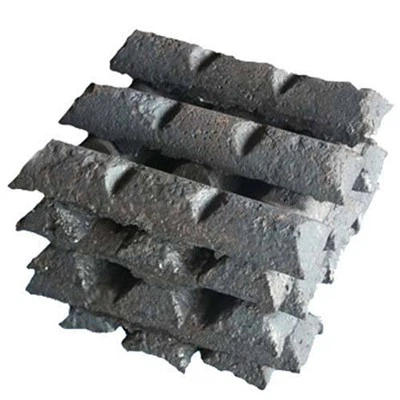
First off, let’s talk a bit about silicon carbide itself. It’s a compound made up of silicon and carbon. This material has some really cool features. It’s super hard, which makes it durable. It also has good thermal conductivity, meaning it can handle heat well. And it has a high breakdown electric field, which is important for electrical applications.
Now, let’s dive into UV-emitting devices. Ultraviolet light is a part of the electromagnetic spectrum with wavelengths shorter than visible light. There are different types of UV light, like UVA, UVB, and UVC. UVC, in particular, is known for its germicidal properties, which is why it’s used a lot in disinfection.
So, how does silicon carbide fit into all this? Well, one of the main ways silicon carbide is used in UV-emitting devices is in the form of semiconductor materials. In a UV LED (Light Emitting Diode), the semiconductor material is crucial. When an electric current passes through it, electrons and holes combine, and this process releases energy in the form of light.
Silicon carbide can be used as a substrate for growing other semiconductor materials, like gallium nitride (GaN). GaN is commonly used in UV LEDs because it can emit light in the UV range. The silicon carbide substrate provides a good base for the growth of GaN. It has a lattice structure that’s relatively close to that of GaN, which means the GaN layer can be grown more easily and with fewer defects.
The quality of the substrate is really important. If the substrate has a lot of defects, it can affect the performance of the UV LED. For example, it might reduce the efficiency of light emission or shorten the lifespan of the device. Silicon carbide’s high-quality crystal structure helps to minimize these issues.
Another advantage of using silicon carbide in UV-emitting devices is its thermal management capabilities. As I mentioned earlier, silicon carbide has good thermal conductivity. In UV LEDs, a lot of heat is generated during operation. If this heat isn’t dissipated properly, it can cause the device to overheat, which will reduce its efficiency and potentially damage it. The silicon carbide substrate helps to transfer the heat away from the active part of the LED, keeping it cool and working efficiently.
Let’s also talk about the cost aspect. While silicon carbide might seem a bit more expensive compared to some other materials at first glance, it offers long – term cost savings. Because of its durability and the fact that it helps to improve the performance and lifespan of UV LEDs, it reduces the need for frequent replacements. This is especially important for applications where the UV – emitting devices are used continuously, like in water purification systems or air disinfection units.
In water purification, UV – emitting devices are used to kill bacteria, viruses, and other microorganisms. The UVC light can penetrate the cell walls of these organisms and damage their DNA, preventing them from reproducing. Silicon – carbide – based UV LEDs are a great option for this because they are reliable and can operate for long periods without significant degradation.
In the field of air disinfection, too, these devices are becoming more and more popular. With the increasing awareness of the importance of clean air, especially in public places like hospitals, schools, and commercial buildings, the demand for efficient UV – based air disinfection systems is on the rise. Silicon carbide – enabled UV LEDs can provide a consistent and effective source of UV light for these applications.
Now, let’s think about the manufacturing process of UV – emitting devices with silicon carbide. The growth of the semiconductor layers on the silicon carbide substrate is a complex process. It usually involves techniques like metal – organic chemical vapor deposition (MOCVD). In MOCVD, chemical precursors are introduced into a reaction chamber, and under specific conditions of temperature and pressure, the semiconductor layers are grown on the substrate.
Silicon carbide suppliers play a crucial role in this process. We need to provide high – quality silicon carbide substrates that meet the strict requirements of the device manufacturers. That means having precise control over the crystal structure, surface smoothness, and doping levels of the silicon carbide.
As a silicon carbide supplier, I’m really excited about the future of UV – emitting devices. With continuous research and development, we’re seeing improvements in the efficiency and performance of these devices. For example, researchers are working on new ways to optimize the design of the semiconductor layers on the silicon carbide substrate to increase the output of UV light.
There are also new applications emerging for UV – emitting devices. For instance, in the field of horticulture, UV light can be used to control plant growth and development. Some plants respond well to specific wavelengths of UV light, and by using silicon – carbide – based UV LEDs, growers can provide the right amount and type of light to their crops.
Another area with potential is in the field of medical research. UV light can be used to study biological samples at a cellular level. Silicon – carbide – enabled UV – emitting devices can offer a more precise and reliable source of UV light for these studies.

If you’re in the business of manufacturing UV – emitting devices or are interested in exploring the use of UV light in your industry, I’d love to have a chat with you. As a silicon carbide supplier, I can provide you with high – quality silicon carbide substrates that can help you take your products to the next level. Whether you’re looking for a more efficient way to produce UV LEDs or need a reliable material for your new UV – based application, I’m here to help. Just reach out, and we can start discussing how silicon carbide can fit into your projects.
Ferro Niobium References:
- "Semiconductor Materials and Devices" by S. M. Sze
- "Ultraviolet Technology for Water and Wastewater Treatment" by R. G. Malley and S. R. Boltz
- Research papers on silicon carbide – based UV LEDs from scientific journals such as Applied Physics Letters and IEEE Photonics Journal
ZhenAn International Co., Limited
ZhenAn International Co., Limited is one of the leading silicon carbide manufacturers and suppliers in China. We warmly welcome you to wholesale discount silicon carbide in stock here from our factory. All our products are with high quality and competitive price.
Address: Huafu Commercial Center, Wenfeng District, Anyang City, Henan Province, China
E-mail: info@zaferroalloy.com
WebSite: https://www.ferro-silicon-alloy.com/
