Hey there! As a supplier of spiral concentrators, I’ve seen firsthand how temperature can have a big impact on the operation of these nifty machines. It’s not something that’s always on people’s minds when they’re looking into buying a spiral concentrator, but trust me, it’s a crucial factor. Spiral Concentrator
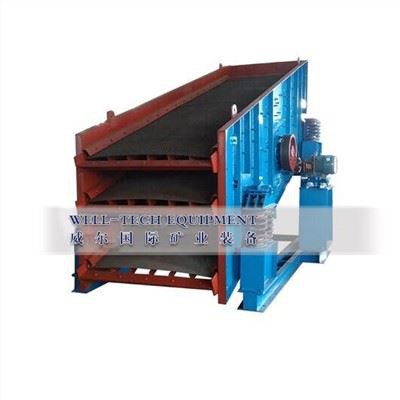
Let’s start off by talking about what a spiral concentrator actually does. In simple terms, it’s a device used in the mining and mineral processing industry to separate different materials based on their specific gravity. You toss your ore – a mixture of various minerals – onto the spiral, and as it flows down the spiral path, the heavier minerals tend to move towards the inner part of the spiral, while the lighter ones stay on the outer part. This way, you can separate the valuable minerals and get a more concentrated product.
So, how does temperature fit into all of this? Well, temperature affects the physical properties of both the ore and the fluid (usually water) that’s used in the separation process.
Impact on the fluid properties
First, let’s look at the fluid. Water is the most commonly used fluid in spiral concentrators, and temperature has a big effect on its viscosity. When the temperature is low, the viscosity of water increases. Thick water doesn’t flow as easily as thin water. You can think of it like honey and water at room temperature. Honey is thick and moves slowly, while water is thin and flows quickly.
In a spiral concentrator, high – viscosity water means that the particles in the ore mixture have a harder time moving through the fluid. The heavier particles that are supposed to settle towards the inner part of the spiral may not be able to cut through the thick fluid as efficiently. This can lead to a less efficient separation process. The heavier and lighter particles may not separate as cleanly as they should, and you might end up with a lower – grade concentrated product.
On the other hand, when the temperature is high, the viscosity of water decreases. The water becomes thinner and flows more easily. This sounds great, right? Well, it can be a double – edged sword. While the particles can move more freely through the thin water, it can also cause the particles to be jostled around more. The fast – flowing water might not give the heavier particles enough time to settle properly, and they could end up getting mixed with the lighter particles again.
Influence on the ore particles
Temperature also affects the ore particles themselves. Some ores may become more brittle at low temperatures. The cold might cause small cracks or fractures in the particles, which can change their shape and size. In a spiral concentrator, the size and shape of the particles play a big role in how they behave during the separation process. Irregularly – shaped or cracked particles may not move through the spiral in the same predictable way as smooth, intact particles. This can disrupt the normal separation patterns and reduce the overall efficiency of the concentrator.
At high temperatures, certain ores may undergo chemical reactions. For example, some sulfide ores can start to oxidize at elevated temperatures. Oxidation can change the surface properties of the ore particles, affecting how they interact with the fluid and with each other. If the surface properties of the particles change, it can make it harder to separate them based on their specific gravity.
Real – world scenarios and how to deal with temperature issues
In colder regions, say in the northern parts of Canada or Alaska, where the winter temperatures can drop well below freezing, operators of spiral concentrators need to take extra precautions. They might need to insulate the equipment to keep the water from freezing. Even if the water doesn’t freeze, the low temperatures can still cause problems with viscosity. One solution is to heat the water before it enters the concentrator. This can help keep the viscosity at an optimal level for the separation process.
In hot climates, like in the deserts of Australia or parts of Africa, the opposite problem occurs. The high temperatures can cause the water to evaporate quickly. This not only changes the viscosity of the remaining water but also affects the overall amount of fluid available for the separation process. Operators may need to add more water regularly to maintain the right balance. They may also need to monitor the temperature closely and adjust the flow rate of the ore and water to compensate for the changes in particle behavior.
Performance data and observations
We’ve done our fair share of tests and monitored different installations over the years. From our data, we’ve seen that when the temperature drops below 10°C, the separation efficiency of the spiral concentrator can decrease by about 10 – 15%. That means you’re getting less of the valuable minerals in your concentrated product. On the other hand, when the temperature rises above 35°C, we’ve noticed a similar drop in efficiency, mainly due to the evaporation and changes in particle behavior.
Advantages of our spiral concentrators in different temperatures
At our company, we’ve designed our spiral concentrators to be as adaptable as possible to different temperature conditions. We use high – quality materials that can withstand both extreme cold and heat without losing their structural integrity. Our equipment comes with adjustable settings that allow operators to fine – tune the process based on the temperature. For example, you can adjust the water flow rate and the speed at which the ore is fed onto the spiral to optimize the separation process in different temperature environments.
Why you should choose our products

If you’re in the market for a spiral concentrator, you need one that can perform well regardless of the temperature. Our products are known for their reliability and efficiency. We’ve spent years perfecting our designs to make sure that they can handle the toughest temperature conditions. Whether you’re operating in a freezing cold mine or a scorching hot desert, our spiral concentrators will keep on chugging away and giving you the best results.
Let’s talk business
Inflatable Flotation Machine Don’t let temperature issues hold back your mineral processing operations. Our team of experts is here to help you choose the right spiral concentrator for your specific needs. We can provide you with all the information you need about how our equipment performs in different temperature conditions. Whether you’re a small – scale miner or a large – scale industrial operation, we’ve got you covered. Reach out to us to start a conversation about how our products can improve your mineral separation process. We’re eager to work with you and help you get the most out of your ore.
References
- Smith, J. (2018). Mineral Processing Handbook. Publisher: Mining Press.
- Brown, A. and Green, B. (2019). Temperature Effects on Fluid and Particle Dynamics in Separation Processes. Journal of Mining and Minerals Research, 22(3), pp. 45 – 62.
- White, C. (2020). Adaptable Design in Spiral Concentrators for Variable Temperature Conditions. International Journal of Mineral Processing Technology, 15(1), pp. 12 – 25.
Jiangxi Well-tech International Mining Equipment Co., Ltd.
Jiangxi Well-tech International Mining Equipment Co., Ltd. is one of the most professional spiral concentrator manufacturers and suppliers in China, featured by quality products and good service. Please rest assured to wholesale customized spiral concentrator at competitive price from our factory.
Address: Guzhang Industrial Park of Shicheng County, Ganzhou City, Jiangxi Province, China
E-mail: mily@benefication.com
WebSite: https://www.cn-welltech.com/
