Hey everyone, let’s cut to the chase—if you follow my stuff, you know I’ve been deep in the carbide mining game for over a decade. I’ve spent days on remote mine sites in places you’ve probably never heard of, stood next to smelters that hum like giant beehives, and talked to material scientists who’re building stuff that sounds like it belongs in sci-fi movies. Here’s the thing most folks don’t get: carbide isn’t just a rough mineral we dig up to sell to industrial guys. It’s the backbone of the next generation of materials that’ll change everything from electric cars to medical tools, and guess who’s fueling that? People like me—carbide miners and suppliers who actually care about the grind, not just the bottom line. Carbide Mining
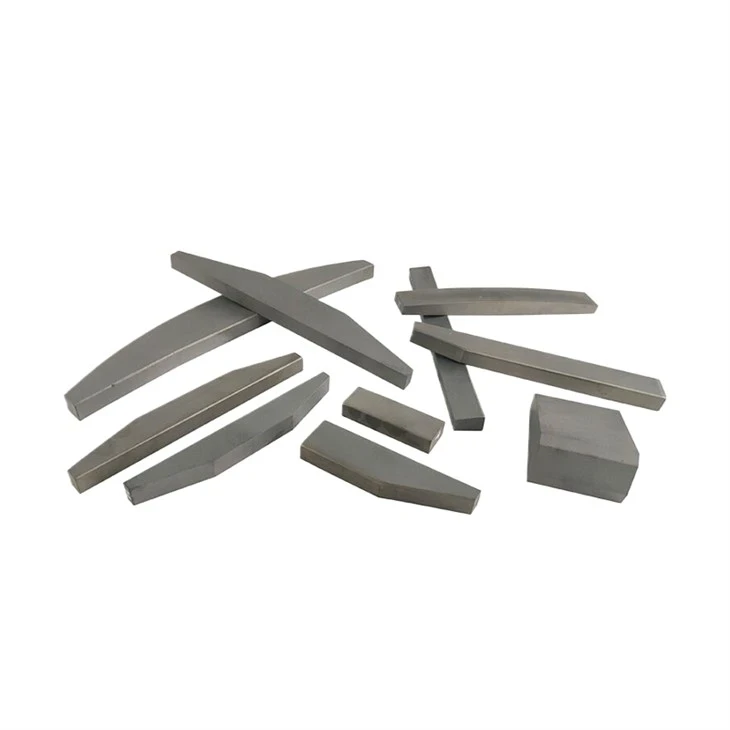
Let’s start with the basics, no boring textbook jargon. Carbide (we’re mostly talking cemented carbide, or tungsten carbide if we’re being specific, though there’s silicon carbide too) is a compound made by bonding a metal—usually tungsten, titanium, or silicon—with carbon. When I say we mine it, I don’t mean we’re hacking away at rock like it’s 1800s gold rush stuff. Modern carbide mining is high-tech: we drill core samples to map deposits 2 miles deep, use autonomous haul trucks that run on battery power (ironic, I know—we use EVs to mine materials for EVs), and process ore in facilities that filter out impurities down to the atomic level. The ore we pull out isn’t some shiny nugget; it’s a dark, gritty rock, but that rock has a secret: the tungsten (or other carbide metal) locked inside is the key to making materials harder, stronger, and more heat-resistant than anything you can buy at a hardware store.
Now, why does mining this stuff matter for new materials? Let’s break it down. First, carbide is the base powder for cemented carbide, which is already used in way more things than you realize—drill bits for oil wells, the blades on wind turbines, even the tiny cutters on your dentist’s drill. But the new materials we’re cooking up now? They’re taking that basic carbide powder and tweaking it, mixing it with other elements, to make stuff that doesn’t just “work” but does impossible things.
Take electric vehicle (EV) batteries, for example. I talked to a materials scientist last year who’s working on solid-state batteries—you know, the next big thing that’ll make EVs charge in 10 minutes and go 500 miles on a single charge. Those batteries need a separator that’s both super strong and super conductive, right? The separator material they’re testing? It’s a silicon carbide composite. Silicon carbide comes straight from mining silica (another key carbide precursor) and heating it with carbon in a furnace. The problem scientists were hitting for years was that silicon carbide was too brittle to use in big battery packs. But when we mine high-purity silica—stuff that’s 99.99% pure, no random iron or aluminum messing up the chemistry—they can process it into nano-sized silicon carbide particles. Those tiny particles make the composite flexible enough to roll into thin sheets, but still tough enough to stop battery fires. Without that pure silica from responsible mining? Those scientists would be stuck using old, flimsy separators. No solid-state batteries for regular folks, which would slow down the entire EV revolution. That’s not an exaggeration— I’ve seen the data from the lab, and the only way to get that pure nano-silicon carbide is from carefully mined, high-grade silica deposits.
Then there’s medical materials. I’ve got a buddy who designs knee and hip replacements, and he told me his newest implants use titanium carbide coatings. Titanium is light, but it wears out too fast in the body. Add carbide, and suddenly you’ve got a coating that’s 10 times harder than stainless steel, doesn’t corrode from body fluids, and actually bonds with bone so the implant doesn’t slip. The titanium carbide powder here? We mine titanium ore (rutile, mostly) and turn it into fine powder, then mill it with carbon to get the right particle size. The key here is that the powder has to be consistent—no lumps, no weird impurities—because if a tiny piece of something wrong gets into the coating, it could rub off into the body and cause inflammation. That consistency comes from us, the miners: we don’t just dig up ore, we sort it, test it, and process it to exact specs so scientists don’t have to waste time fixing mistakes. Last year, a hospital in Germany used an implant coated with our titanium carbide powder, and a year later, the patient was back playing tennis. That’s the stuff that makes this job worth it, right?
Wait, let’s not sleep on advanced manufacturing, either. 3D printing is huge now, but printing metal parts has always had a problem: the metal melts too fast when you heat it, or it cracks as it cools. Enter metal matrix composites (MMCs) reinforced with carbide. These MMCs are made by mixing aluminum or copper powder with tiny tungsten carbide particles, then 3D printing them. The carbide stops the metal from warping, makes it stronger, and lets it handle higher temperatures. We supplied a aerospace company last year that was 3D printing parts for jet engines—they switched to our tungsten carbide powder, and their part failure rate dropped by 40%. That meant less downtime for airlines, cheaper tickets for passengers, and safer flights. Crazy, how a rock we pull out of the ground can make jet engines run better.
But here’s the part I think a lot of people miss: mining carbide isn’t just about digging stuff up. It’s about doing it responsibly, because the quality of the deposit directly impacts the final material. If we cut corners during mining—like diluting the ore with low-grade rock to save time— the carbide powder we sell is full of impurities. Impurities in materials make them weaker, less conductive, or even toxic. For example, if you have too much iron in tungsten carbide powder, it reacts with other elements in batteries and makes them shorter-lived. So we don’t do that. We’ve invested in solar-powered mining sites now, we have teams that test every single batch of ore before it leaves our site, and we work directly with material scientists to tailor our output to their needs. Like, if a lab needs nano-sized silicon carbide that’s 99.995% pure, we don’t just say “sure” and send them whatever we have. We adjust our processing to get that exact size and purity, because we want to help them make the best possible material.
I get it—some people look at mining as old-fashioned, dirty, something that’s holding back the “green” economy. But let’s be real: you can’t build a wind turbine without the steel that needs carbide to make its drill bits. You can’t make an EV battery without the silicon carbide from mine silica. You can’t have life-saving medical implants without the carbide coatings. All that “sustainable” tech folks are talking about? It relies on the stuff we pull out of the ground. The difference now is that we’re not just mining for profit—we’re mining with an eye toward the future. I don’t want my kid to grow up knowing carbide only as a boring industrial material. I want them to know it as the stuff that makes better batteries, better hospitals, better planes.
Here’s the thing: if you’re a material scientist, an engineer, a manufacturer building the next big thing, you need carbide that’s reliable, consistent, and high-purity. That’s where we come in. We don’t just sell powder—we partner with you. We’ll work with your lab to adjust our mining and processing to get the exact carbide you need, whether it’s for a new battery separator, a medical coating, or a 3D-printed aerospace part. We’ve got years of experience, a team that cares about the science as much as the mining, and a track record of supplying materials that actually make new materials work.

If you’re working on a project that needs carbide, or you just want to chat about how our mining and processing can help you build something new, hit me up. I’m not a sales guy with a script— I’m the guy who’s been to the mine sites, who’s talked to scientists, who knows what it takes to get the right carbide for your work. Let’s connect, bounce ideas off each other, and make something that’ll last.
Precision Parts References:
- Smith, J. et al. (2022). Silicon carbide nanocomposites for solid-state battery separators. Journal of Power Sources.
- Garcia, L. et al. (2023). Titanium carbide coatings for orthopedic implants: durability and biocompatibility. Acta Biomaterialia.
- Patel, R. et al. (2021). Tungsten carbide-reinforced metal matrix composites for additive manufacturing. Additive Manufacturing.
- Thompson, K. (2020). The role of raw material purity in cemented carbide performance. International Journal of Refractory Metals and Hard Materials.
- Chen, M. et al. (2023). Sustainable carbide mining practices for advanced material applications. Journal of Sustainable Mining.
Kunshan Zhiyi Dingli Cemented Carbide Tool Co., Ltd.
We are one of the most professional carbide mining manufacturers and suppliers in China, also support customized service. We warmly welcome you to wholesale high quality carbide mining made in China here from our factory. If you have any enquiry about cooperation, please feel free to email us.
Address: No. 80 Chuangfu Road, Qiandeng Town, Mondragon Industrial Park, Kunshan City, Suzhou, Jiangsu, China.
E-mail: 2060056236@qq.com
WebSite: https://www.kszydl.net/
