Hey there! I’m a supplier of 2 Phase Decanter Centrifuges, and I often get asked about what materials are suitable for building these machines. So, let’s dive right in and chat about it. 2 Phase Decanter Centrifuge
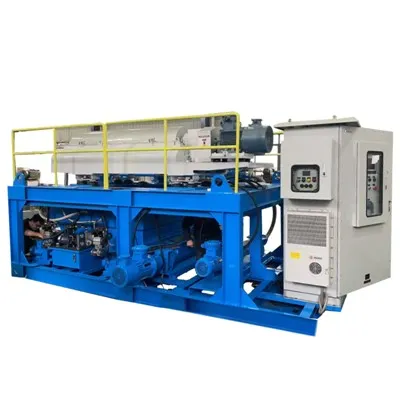
First off, let’s understand what a 2 Phase Decanter Centrifuge does. It’s a piece of equipment that separates two phases of a mixture, usually a solid – liquid or liquid – liquid separation. It works by spinning the mixture at high speeds, using centrifugal force to separate the components based on their density differences.
Now, when it comes to the materials for constructing a 2 Phase Decanter Centrifuge, there are a few key areas to consider: the bowl, the screw conveyor, the bearings, and the housing.
The Bowl
The bowl is the heart of the decanter centrifuge. It’s where the actual separation takes place. For the bowl, stainless steel is a top – choice material. There are different grades of stainless steel, but 304 and 316 are the most commonly used.
Why stainless steel? Well, it’s corrosion – resistant. In many separation processes, the mixtures can be acidic, alkaline, or contain corrosive substances. Stainless steel can withstand these harsh environments without rusting or degrading quickly. For example, if you’re using the centrifuge to separate oil and water in a refinery, the oil might have some acidic impurities. Stainless steel can handle that.
Another great thing about stainless steel is its strength. The bowl has to spin at very high speeds, sometimes up to several thousand revolutions per minute. This creates a lot of stress on the material. Stainless steel can handle this stress without deforming, which is crucial for the long – term performance of the centrifuge.
Some high – end applications might even use duplex stainless steel for the bowl. Duplex stainless steel combines the best of two different types of stainless steel (austenitic and ferritic). It has even better corrosion resistance and higher strength compared to standard 304 or 316. This makes it suitable for very aggressive separation processes, like in the chemical industry.
The Screw Conveyor
The screw conveyor is responsible for moving the separated solids out of the bowl. Just like the bowl, stainless steel is a popular choice for the screw conveyor. It needs to be strong enough to push the solids, which can sometimes be quite abrasive.
However, in some cases, the screw conveyor might be coated with a hard – wearing material. For example, tungsten carbide coating can be applied. Tungsten carbide is extremely hard and wear – resistant. If the solids being separated are very abrasive, like sand or mining ore, the tungsten carbide coating can protect the screw conveyor from excessive wear and tear. This extends the lifespan of the conveyor and reduces maintenance costs.
The Bearings
Bearings are essential for the smooth operation of the centrifuge. They allow the bowl and the screw conveyor to rotate freely. High – quality bearings are usually made of steel alloys.
Chrome steel is a common material for bearings. It has good hardness and toughness, which is necessary to handle the high rotational speeds and the loads placed on the bearings. The bearings also need to be lubricated properly to reduce friction and prevent overheating.
Ceramic bearings are also an option, although they are more expensive. Ceramic bearings have some advantages, such as being more resistant to high temperatures and less likely to corrode. They can also reduce the overall weight of the centrifuge, which can be beneficial in some applications, like in mobile centrifuge units.
The Housing
The housing of the 2 Phase Decanter Centrifuge encloses all the internal components and provides protection. It can be made of carbon steel or stainless steel.
Carbon steel is a cost – effective option. It’s strong and can be easily fabricated. However, it’s not as corrosion – resistant as stainless steel. So, if the centrifuge is going to be used in a corrosive environment, a stainless – steel housing is a better choice.
The housing also needs to be designed to withstand the vibration and noise generated during the operation of the centrifuge. Reinforced designs and vibration – damping materials can be used to ensure a stable and quiet operation.
Other Considerations
In addition to the main components, there are some other small parts that also need to be made of suitable materials. For example, the seals are crucial to prevent leakage of the separated phases. Viton or other rubber – based materials are commonly used for seals because they are flexible, durable, and resistant to a wide range of chemicals.
Also, the electrical components, like the motors and control panels, need to be housed in a protective enclosure. These enclosures are often made of plastic or fiberglass, which can provide electrical insulation and protection from the environment.
Wrapping It Up
Choosing the right materials for a 2 Phase Decanter Centrifuge is crucial for its performance, reliability, and lifespan. Stainless steel is a dominant material for the major components, but depending on the specific application, other materials like tungsten carbide, ceramic, and carbon steel can also play important roles.
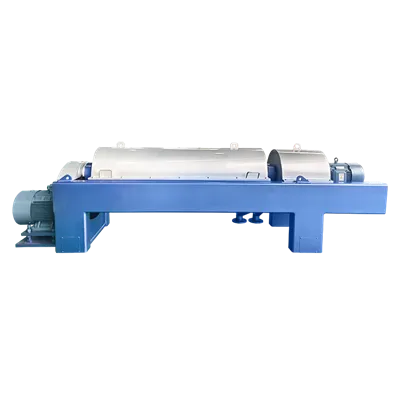
If you’re in the market for a 2 Phase Decanter Centrifuge and want to discuss the best material options for your specific needs, I’m here to help. Whether it’s for a simple water – sludge separation in a sewage treatment plant or a complex chemical separation process, I can provide you with the right solutions.
Decanter Centrifuge So, don’t hesitate to reach out and start a conversation about your centrifuge requirements. We can work together to find the perfect centrifuge that meets your needs and budget.
References
- ASM Handbook: Metalworking and Metal Performance
- Centrifuge Technology: Principles and Applications by John Smith
- Materials in Engineering Design by David G. Ullman
Lishui Yuanrong Environmental Protection Equipment Co., Ltd.
As one of the most professional 2 phase decanter centrifuge manufacturers and suppliers in China, we have world-leading production equipment and strong manufacturing capabilities. Please feel free to buy customized 2 phase decanter centrifuge from our factory. Also, quotation is available.
Address: Lot 6-1, Block 15, Wanyang Zongchuang City, Lishui, Zhejiang, China
E-mail: 361184920@qq.com
WebSite: https://www.yrhdc.com/
